
The medical vs vision insurance decision is not a coding decision, and treating it as one is why it keeps going wrong. By the time a claim reaches a coder, the payer has already been chosen, the diagnosis is already attached, and the only thing left to do is submit it to whichever plan the front desk picked at check in.
The eye is the only part of the body routinely covered by two separate insurance products at the same time. A patient can hand over a health insurance card and a vision plan card for the same appointment, and only one of them is the correct payer for the reason they came in.
Key insight:
The medical versus vision call is made at check in by whoever asks why the patient is here. Everything downstream inherits that answer.
What medical vs vision insurance actually separates
A vision plan is not health insurance. It is a wellness and materials benefit, structured around a flat routine exam allowance and a materials allowance for frames, lenses or contacts, usually once every twelve or twenty four months. VSP and EyeMed are the two names most practices see most often.
Medical insurance treats the eye as a medical organ. It covers examination and treatment when something is wrong, when a symptom brings the patient in, or when a diagnosed condition needs monitoring over time. There is no materials allowance and no routine benefit.
So medical vs vision insurance is not one question with two answers. The two products do not overlap in what they are for. They overlap in when they apply, because one thirty minute appointment can contain both a medical reason and a routine refractive need.
Key insight:
Vision insurance vs medical insurance is not a coverage hierarchy. They are two different products that happen to arrive on the same day.
What vision insurance covers, and where it stops against medical insurance
A vision plan is built for a well visit. The patient sees adequately, has no complaint, and comes in for a routine check and an updated prescription. The plan covers the routine exam, the refraction that produces the prescription, and an allowance toward materials. The diagnosis is a routine one and the patient usually owes a flat copay.
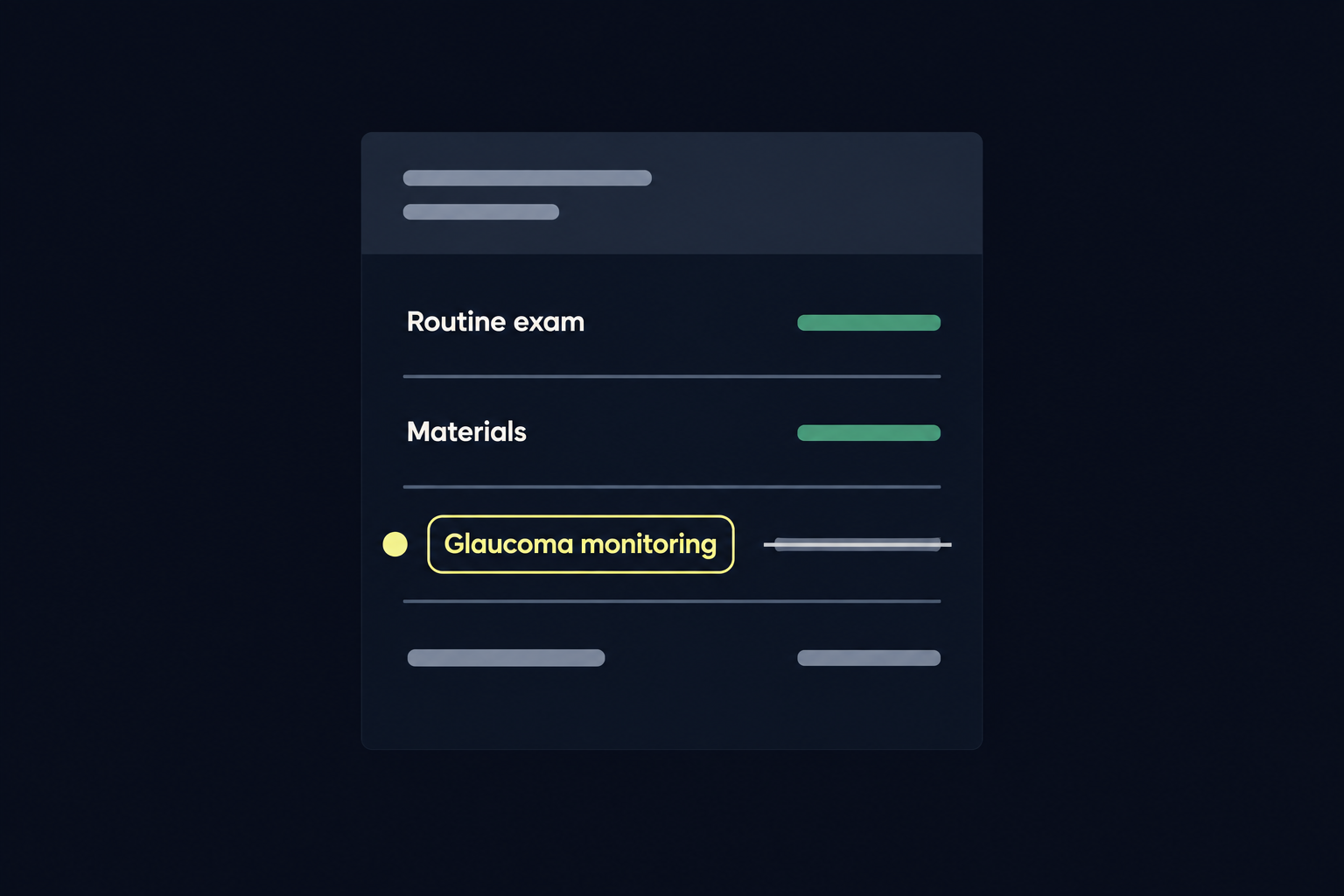
What a vision plan does not do is behave like medical coverage. It will not carry the workup for a red or painful eye. It will not cover glaucoma monitoring or diabetic retinal surveillance. It is capped and periodic by design, and asking it to pay for medical work produces either a reduced payment or a non covered line.
The two largest plans handle their exam and materials benefits differently, and the detail matters at the desk. The VSP billing guide and the EyeMed billing guide break each one down.
Key insight:
A vision plan paying a medical visit is not a win. It pays at the routine rate, and the difference never appears on a denial report.
When medical insurance covers the eye
Medical insurance becomes the payer the moment the reason for the visit is medical. Flashes and floaters, sudden blurring, pain, injury, foreign body, dry eye disease, or a diagnosed condition such as glaucoma, macular degeneration or diabetic retinopathy that has to be tracked.
A recorded complaint is what makes that true. Blurred vision has its own diagnosis code, H53.8, and it holds as the diagnosis until the exam establishes a cause. If nobody writes the complaint down, the encounter carries no medical reason and defaults to routine.
The visit is documented either with the comprehensive ophthalmological service codes, 92004 for a new patient and 92014 for an established one, or with office visit evaluation and management codes, depending on the complaint and what the documentation supports. Either route is a medical claim.
A patient under glaucoma surveillance has a medical reason at every visit, which is why that monitoring belongs to the medical carrier year after year rather than consuming a once a year vision benefit.
Key insight:
Is vision insurance separate from medical insurance for a patient with a diagnosed eye condition? Yes, and the diagnosis is what makes it a medical encounter regardless of which card they hand over.
Which insurance pays for the eye exam
The payer is set by the reason the patient booked, not by what the examination finds.
A patient who books a routine annual check with no complaint is a vision plan visit even if the doctor spots an early cataract. A patient who calls about sudden floaters is a medical visit even if the examination is clean. The presenting reason fixes the payer at scheduling and check in, and a finding does not retroactively move the visit into the other system.
Key insight:
The finding does not choose the payer. The reason for the visit does, and it is already decided before the patient sits down.
Where the medical vs vision insurance line falls, visit by visit
| Reason the patient booked | Payer | Typical coding route |
|---|---|---|
| Routine check, no complaint, wants new glasses | Vision plan | Routine exam plus 92015 refraction |
| Contact lens fitting or renewal, no complaint | Vision plan | Routine exam plus fitting codes |
| Red, painful or watering eye | Medical | 92004 or 92014, or an E/M code |
| Sudden blur, flashes or floaters | Medical | 92004 or 92014, or an E/M code |
| Diabetic annual retinal examination | Medical | Medical exam plus retinal imaging where indicated |
| Glaucoma monitoring, established diagnosis | Medical | Medical exam plus testing where indicated |
| Foreign body or injury | Medical | E/M or the relevant procedure code |
| Routine check where the doctor finds pathology | Vision plan for this visit, medical for the follow up | Routine exam now, medical encounter at recall |
The last row is the one that costs practices money. The finding does not convert the visit that produced it. It creates a medical reason for the next one.
Key insight:
Eight rows, and only one of them is ambiguous. The ambiguity sits in what happens next, not in what happens today.
Can you bill medical and vision insurance for the same visit
Sometimes, and it has to be deliberate. This is the one case where medical vs vision insurance is not an either or.
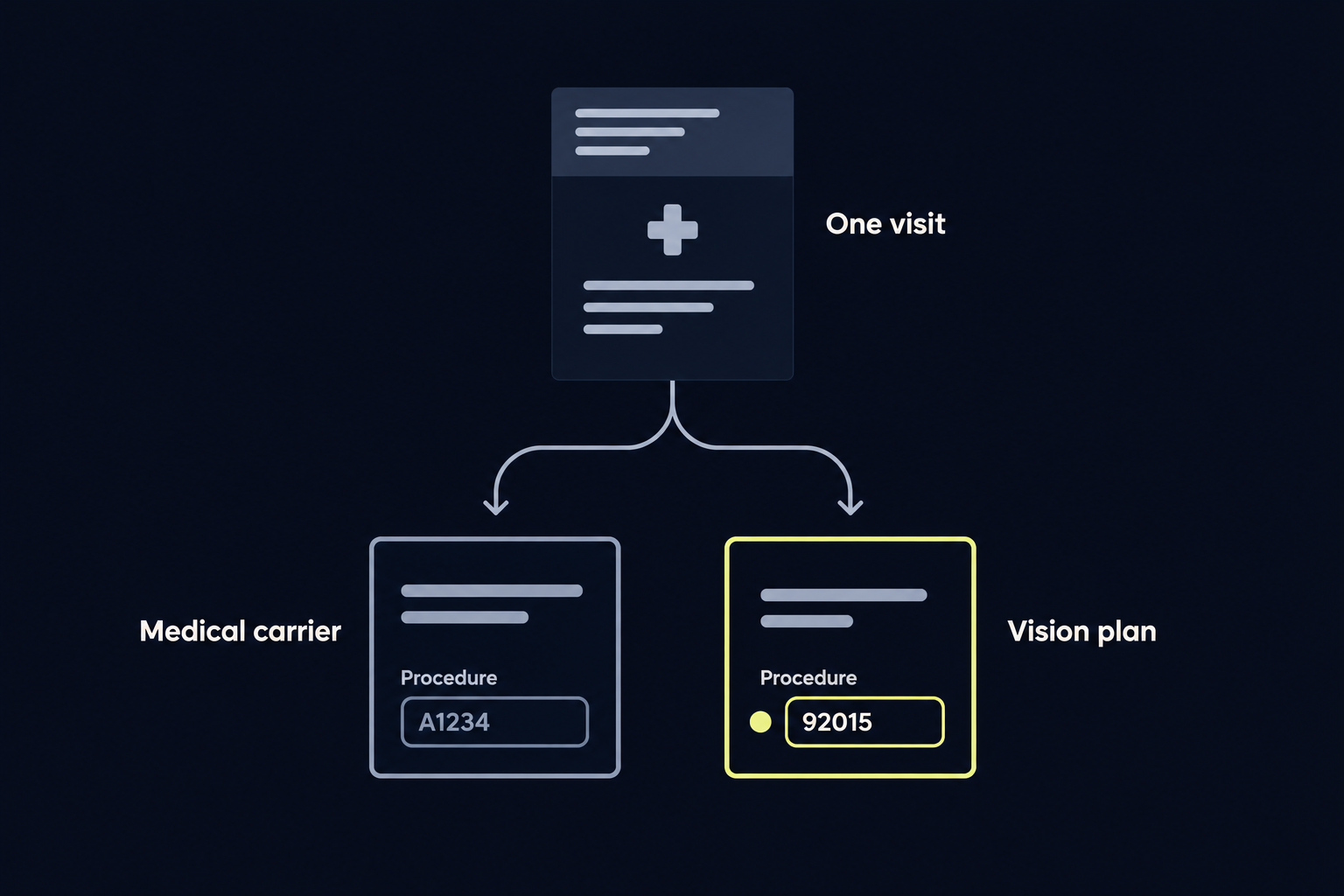
A patient can arrive with a medical complaint and also want their annual glasses check. Handled properly, the medical work bills to the medical carrier and the routine refractive component bills to the vision plan, as two separate decisions inside one appointment. Handled by accident, it produces a duplicate or a takeback.
Three things trip up experienced offices.
Refraction. CPT 92015 is not covered by Medicare, and most commercial medical plans follow Medicare on this. It belongs to the vision plan or to the patient, even during an entirely medical visit. The 92015 refraction billing guide covers how to handle the charge and the patient conversation.
The split itself. Running both plans for one appointment is coordination of benefits, and the order the plans are asked in determines whether it holds. How coordination of benefits works in optometry sets out the sequence.
Materials. Frames, lenses and contacts are a vision plan or self pay item even when the underlying condition was medical. Which codes sit on which claim is in the vision billing codes reference.
Key insight:
Billing both plans for one visit is legitimate and it is not a workaround. It is two decisions made on purpose, and the moment it becomes one decision made twice it is a takeback waiting to happen.
Why the medical vs vision insurance call cannot be fixed after the claim
Send a medical visit to the vision plan and it frequently pays. It pays at the routine rate, there is no rejection, and nothing on the remittance says wrong payer. The shortfall never reaches a denial report because there was no denial.
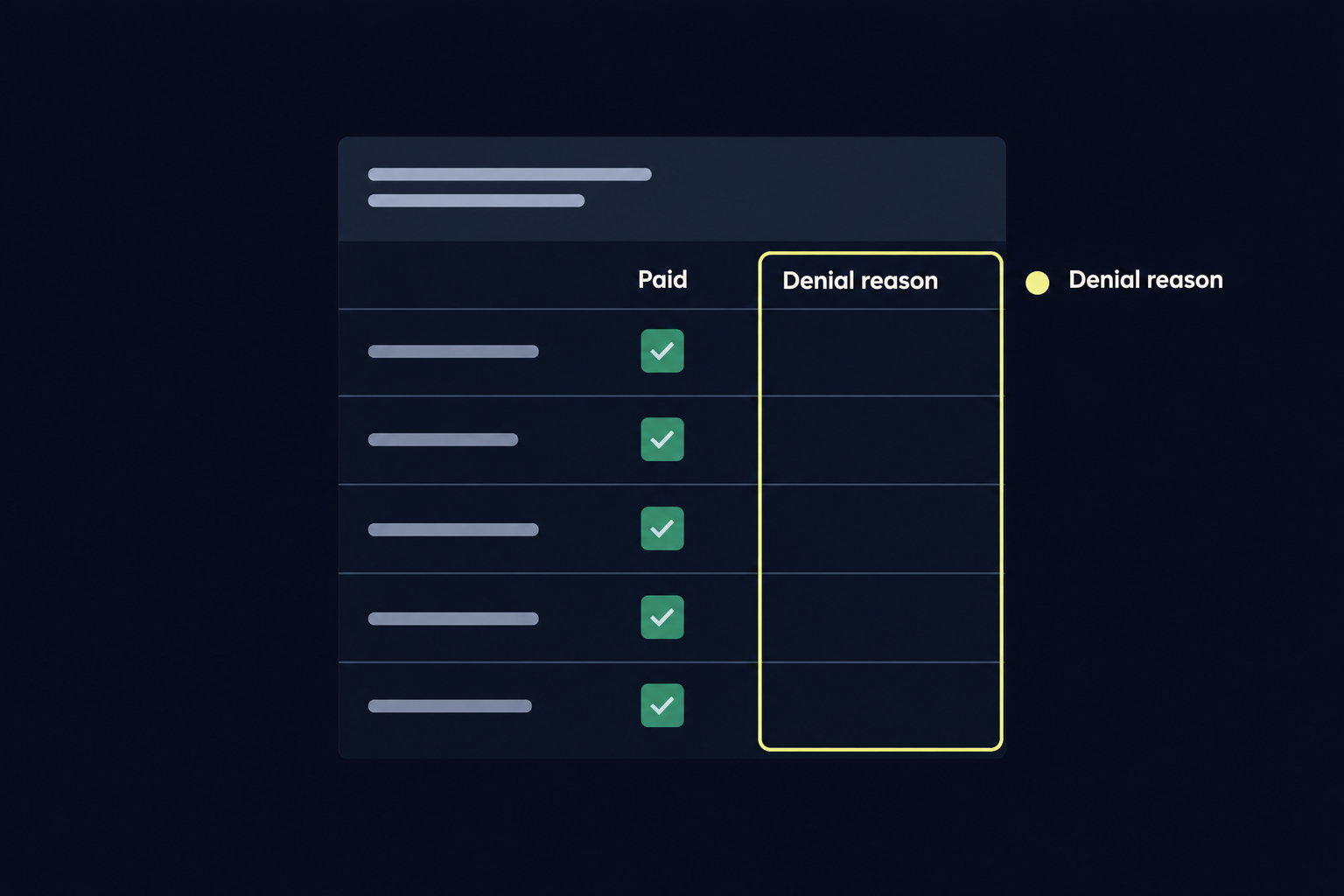
That is what separates this from a coding error. A coding error announces itself with a reason code that points at the fix. A routing error announces nothing at all, and no claim scrubber, clearinghouse edit or denial workflow is built to catch a claim that is clean, accepted and paid.
The correction has to happen before the claim exists, which means it has to happen at check in, which means it is a front desk question rather than a billing one. Everything downstream of that moment, from charge entry through to denial follow up, sits in the optometry billing guide.
Key insight:
Every tool in the billing stack is built to catch a malformed claim. A misrouted claim is perfectly formed, which is exactly why it survives all of them.
Get the routing call right before the claim
GIMBL checks eligibility on both the vision plan and the medical plan at intake, decides which one the visit belongs to, and builds the claim before the exam.
Start here: Create an account and route the next visit
Frequently asked questions
Is medical and vision insurance the same thing?
No. Medical insurance covers the eye as a medical organ, for symptoms, injury and disease. A vision plan is a wellness and materials benefit that offsets a routine exam and glasses or contacts. They are separate products sold and administered separately.
Which insurance pays for an eye exam?
The reason the patient booked decides it. A routine check with no complaint is a vision plan exam. A visit for a symptom, an injury or to monitor a diagnosed condition is a medical exam, even when the patient also holds a vision plan.
Can you bill medical and vision insurance for the same visit?
Yes, when a visit contains both a medical reason and a routine refractive need. The medical work goes to the medical carrier and the refraction goes to the vision plan, as two deliberate decisions. It must be split on purpose, not discovered afterwards.
Is vision insurance separate from medical insurance?
Yes. They are different products with different benefit structures, different networks in most cases, and different rates for the same examination.
Does medical insurance cover glasses?
Usually not. Eyewear is a vision plan or self pay item even when the eye condition being treated is medical. Medical insurance covers the examination and treatment, not the materials.
What happens if you bill the wrong one?
A medical visit sent to the vision plan often pays at the routine rate with no denial, so the shortfall is invisible. A routine visit sent to medical can produce an unexpected deductible or coinsurance charge for the patient.
Why are vision and medical insurance separate in the first place?
Vision plans developed as materials and wellness benefits built around glasses and routine examinations, while medical insurance covers illness and injury. They were designed for different jobs and are still sold as separate products.