
Every rule quoted below is cited to the 2023 edition of the Superior Vision eye care professional manual, with its section number, because that is the most recent edition published outside the provider portal. Confirm against your own portal copy before you act on a number.
Superior Vision billing goes wrong in a way the remittance never explains. Two rules in the provider manual decide most of it, and neither one appears on any page currently ranking for this plan. One is a filing window shorter than most practices assume. The other says a code you are billing separately was never separately billable.
Superior Vision billing starts with a refraction you cannot bill twice
The 2023 eye care professional manual is direct about it.
The refraction (CPT 92015) is considered to be a part of the comprehensive eye examination per the Participating Eye care professional Agreement.
That is not a coverage rule you can appeal. It is a term of the agreement you signed to join the network. The refraction is inside the exam fee, so a separate 92015 line on a Superior claim is not underpaid when it comes back at zero. It was never owed.
Practices bill it anyway, usually out of habit carried over from plans that do pay it separately, and usually with a patient responsibility amount attached. That second part is where it stops being a billing error and becomes a refund conversation, because you have collected for a service the agreement already priced into the exam.
The rule changes when the visit is not a Superior visit at all. Refraction billed to a medical payer follows different logic entirely, which is covered in the detail it deserves on billing CPT 92015 as a refraction charge.
Key insight:
A zero paid 92015 line on a Superior Vision claim is usually the agreement working as written, not a denial to work. Check the contract before you build the appeal.
The Superior Vision timely filing limit is 90 days from date of service
Section VII of the 2023 eye care professional manual states it plainly.
All claims must be submitted to the Company within 90 days of the date of service, or as otherwise required by applicable law.
The same manual repeats it in Section II, with the number spelled out. Eye care professionals are responsible for submitting all claims within ninety days of the date services were provided, unless a longer period is required by law.
Read the anchor date carefully, because it is the part that costs money. The clock runs from the date of service. Not from the day the claim was built, not from the day a rejection came back, and not from the day somebody noticed. A claim that went to the wrong plan first has been burning that window for the entire life of the mistake.
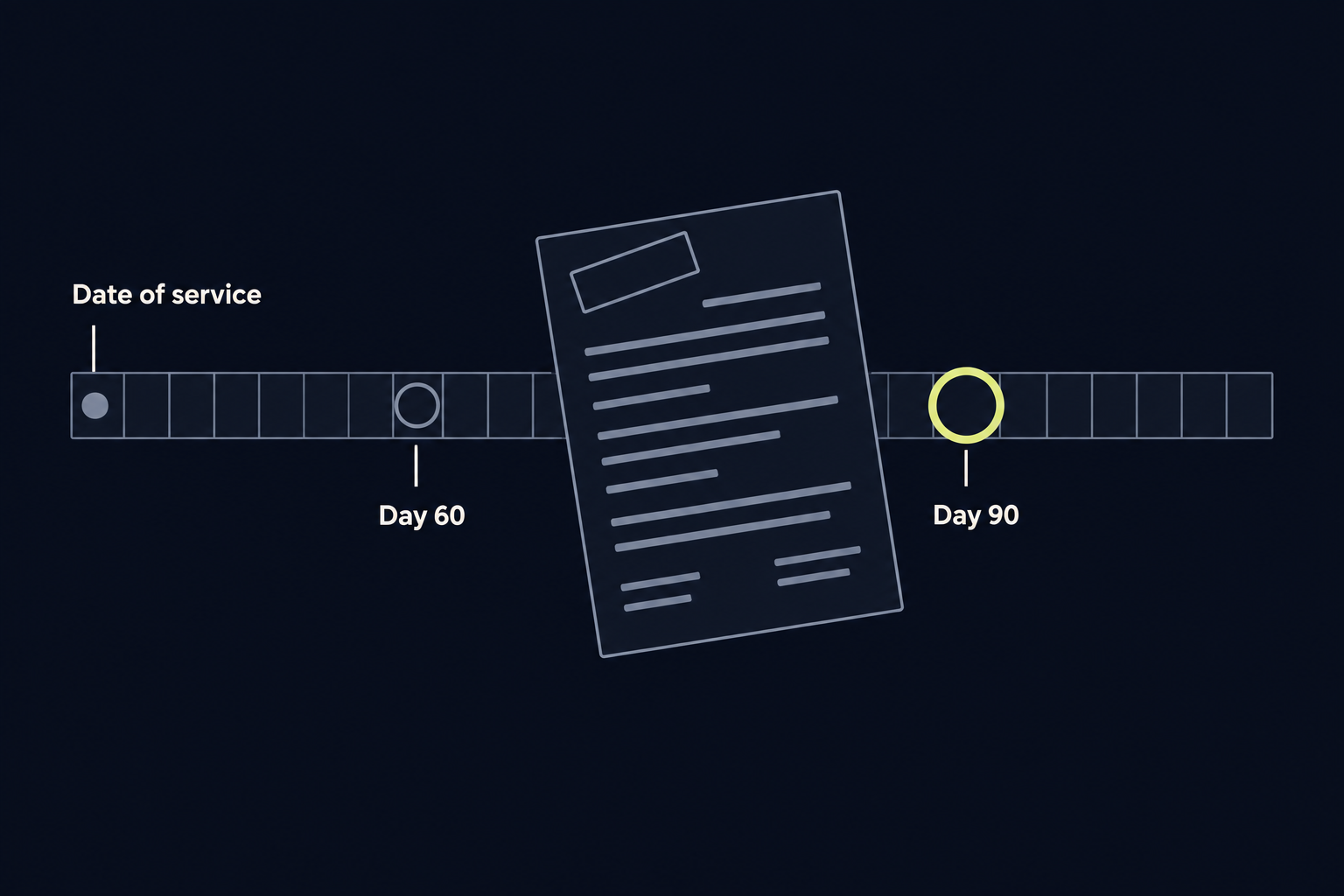
Compare it to the other plan under the same parent company. Davis Vision runs a sixty day filing window from the date services were provided. Same owner, thirty days of difference, and no warning anywhere in either portal that the number changes depending on which card the patient handed over.
Key insight:
Ninety days sounds generous until a claim spends six weeks at the wrong payer. The window does not restart when the first submission fails.
Superior Vision payer ID, and why two numbers are both right
That manual names a ChangeHealthcare payer ID of 41352 and a claims department at PO Box 967, Rancho Cordova, California. Third party payer directories publish 13305 for the same plan on a different network.
Neither is wrong. Clearinghouses assign their own routing numbers, so the correct ID is whichever one your clearinghouse uses for this plan, and the only reliable way to know is to ask them rather than to copy a number off a directory page.
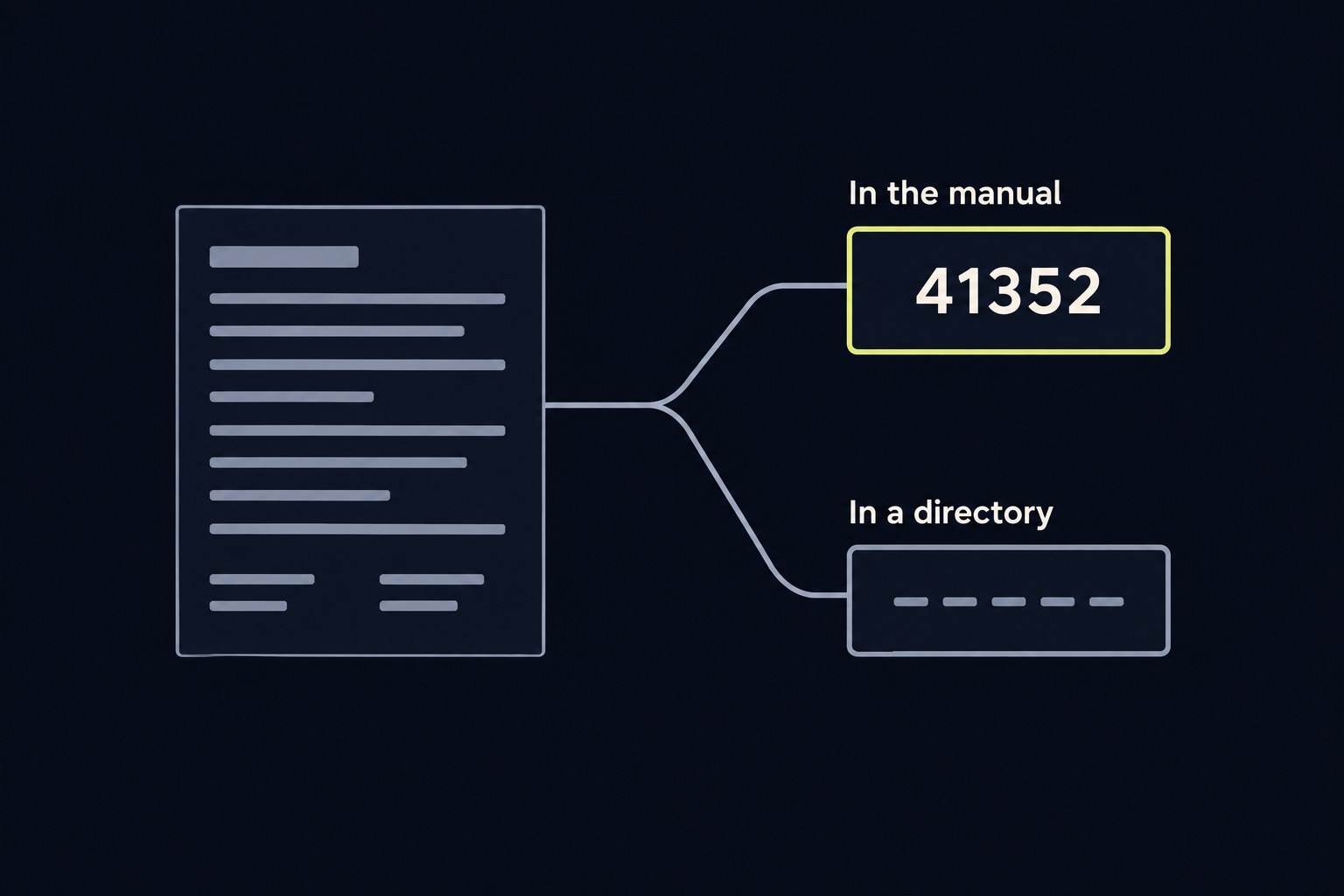
This matters for Superior Vision claims submission because a wrong payer ID does not always reject cleanly. Sometimes it routes to a plan that holds the claim, and the rejection arrives weeks later with the filing clock already spent.
Key insight:
A payer ID copied from a web page is an assumption. Confirm it against your own clearinghouse payer list, once, and write it down where the biller works.
Superior Vision coordination of benefits and the medical fork
A Superior Vision visit stops being a vision visit the moment the reason for the visit changes. Prior authorization is generally not required for routine benefits under this plan, which the manual describes as available on demand subject to member eligibility. That makes the routing call the only real decision at check in, and the reason for the visit decides it rather than the card.
| What the patient says at check in | Where the visit belongs | What the front desk does next |
|---|---|---|
| Due for my annual exam, no complaints | Superior Vision, routine | Verify the vision benefit and book as routine |
| Vision has changed, or blur that is new | Medical, pending the exam | Verify the medical plan too, before the exam |
| Red eye, pain, flashes or floaters | Medical | Route medical and do not open a routine claim |
| Diabetic, here for the yearly look | Medical, usually | Verify medical, confirm the diagnosis on file is current |
| Both plans active and both may pay | Depends on order | Establish which plan is primary before the exam |
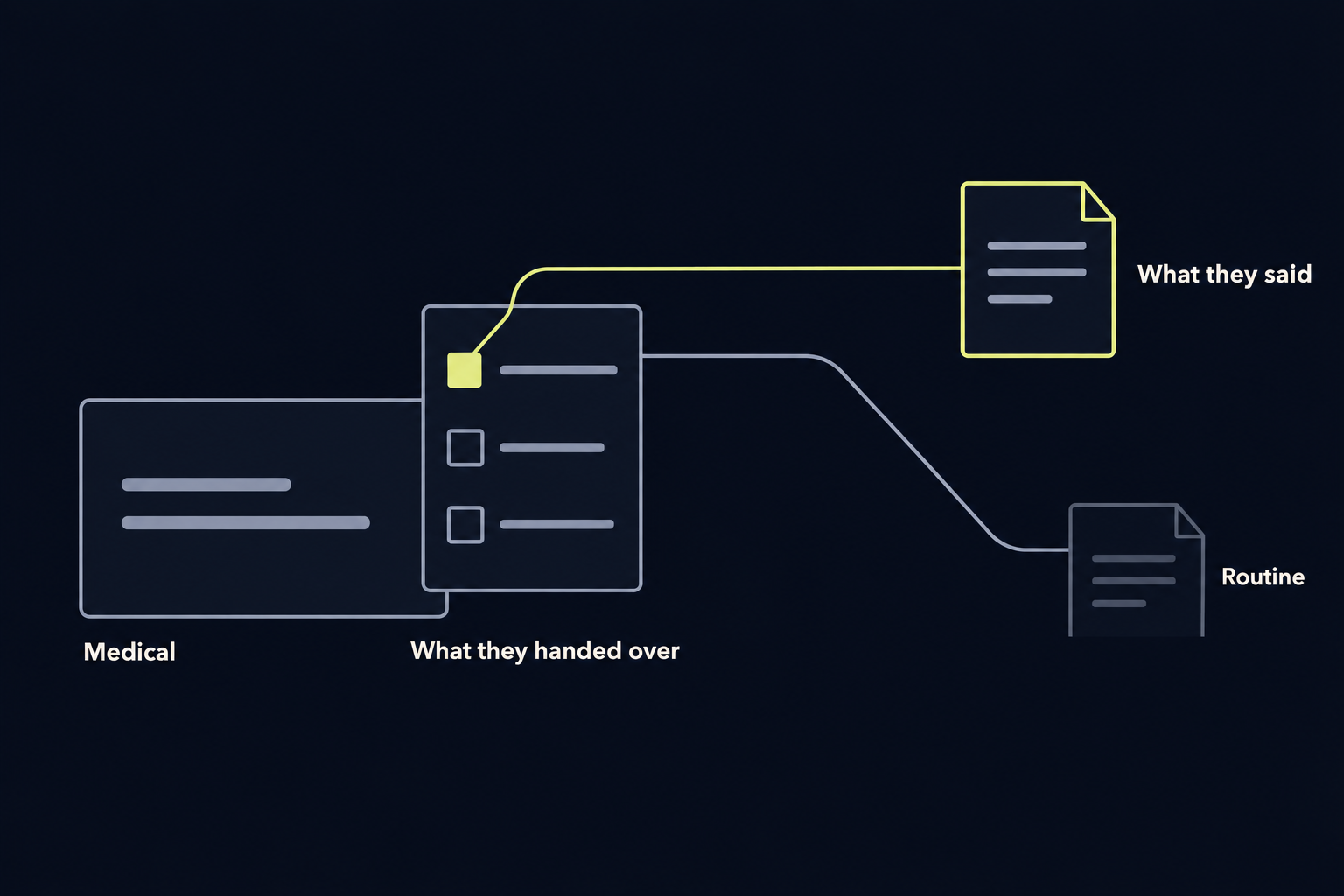
The last row is the one that produces the most rework. Superior Vision coordination of benefits fails more often on sequence than on eligibility, and the order the plans are asked in is a decision rather than a formality, which is why it gets its own treatment on coordinating both plans. The underlying fork, medical against routine, is set out in how the two kinds of coverage divide a visit.
Key insight:
The routing call is made before the exam by the person with the least clinical information. Nothing downstream can correct a visit that was opened on the wrong plan.
What the front desk asks before the patient sits down
Three questions, asked in this order, catch most of it. Is anything different about your eyes since last time. Are you being followed for anything, by us or anyone else. Do you carry medical insurance as well as the vision plan.
None of that asks the front desk to diagnose. It asks them to notice, which is teachable in an afternoon, and it is the only part of Superior Vision billing that happens while the outcome is still changeable.
Write the answers where the claim gets built rather than where the schedule gets kept, alongside whatever your routine for verifying a patient's benefits already captures. A note in the appointment record that nobody opens at claim time is the same as no note.
Key insight:
By the time a claim is built, the routing decision is a historical fact. The four seconds at check in are the only place it is still a decision.
Check both plans before the exam, not after the denial
GIMBL checks eligibility on the vision plan and the medical plan at intake and makes the routing call before the claim exists. Create an account and run it against your next Superior Vision patient.
Frequently asked questions on Superior Vision claims submission
What is the Superior Vision timely filing limit?
Ninety days from the date of service, per Section VII of the 2023 eye care professional manual, unless a longer period is required by applicable law.
Can you bill 92015 separately to Superior Vision?
No. The 2023 manual states the refraction is part of the comprehensive eye examination under the participating provider agreement.
What is the Superior Vision payer ID?
The 2023 manual names ChangeHealthcare payer ID 41352. Other directories list 13305 for different networks. Confirm the one your clearinghouse uses.
Where do Superior Vision paper claims go?
Versant Health, Claims Department, PO Box 967, Rancho Cordova, California 95741, per the manual. Confirm before mailing, because addresses change more often than manuals are reissued.
Does Superior Vision require prior authorization?
Not generally for routine vision benefits, which the manual describes as available on demand subject to eligibility. Non routine services are a separate question for provider relations.
What happens when a routine exam finds something medical?
The reason the patient came decides the plan. A routine visit that uncovers a medical finding does not retroactively become a medical visit, which is why the question gets asked at check in rather than at submission.