
Your eligibility check tells you the vision plan is active. It does not tell you the vision plan should be billed. Those are two different facts, and the gap between them is where most eye care practices quietly lose money.
None of which means vision insurance eligibility software is not worth buying. If somebody in your practice is logging into VSP, then EyeMed, then Davis Vision, one patient at a time, you already know what that costs you in a week. Automating it is the easy call. The harder thing is that every tool in this category answers the same question, and it is the smaller of the two questions your front desk faces every morning.
What vision insurance eligibility software actually returns
An eligibility check is an electronic enquiry to the payer, and what comes back is a short list. Is the member active on the date of service. Which benefits have been used and when they reset. What the copay is. Are you in network. Some tools add the frame allowance and the lens rider.
Every one of those is a fact about the patient's coverage. Not one of them is a fact about the visit.
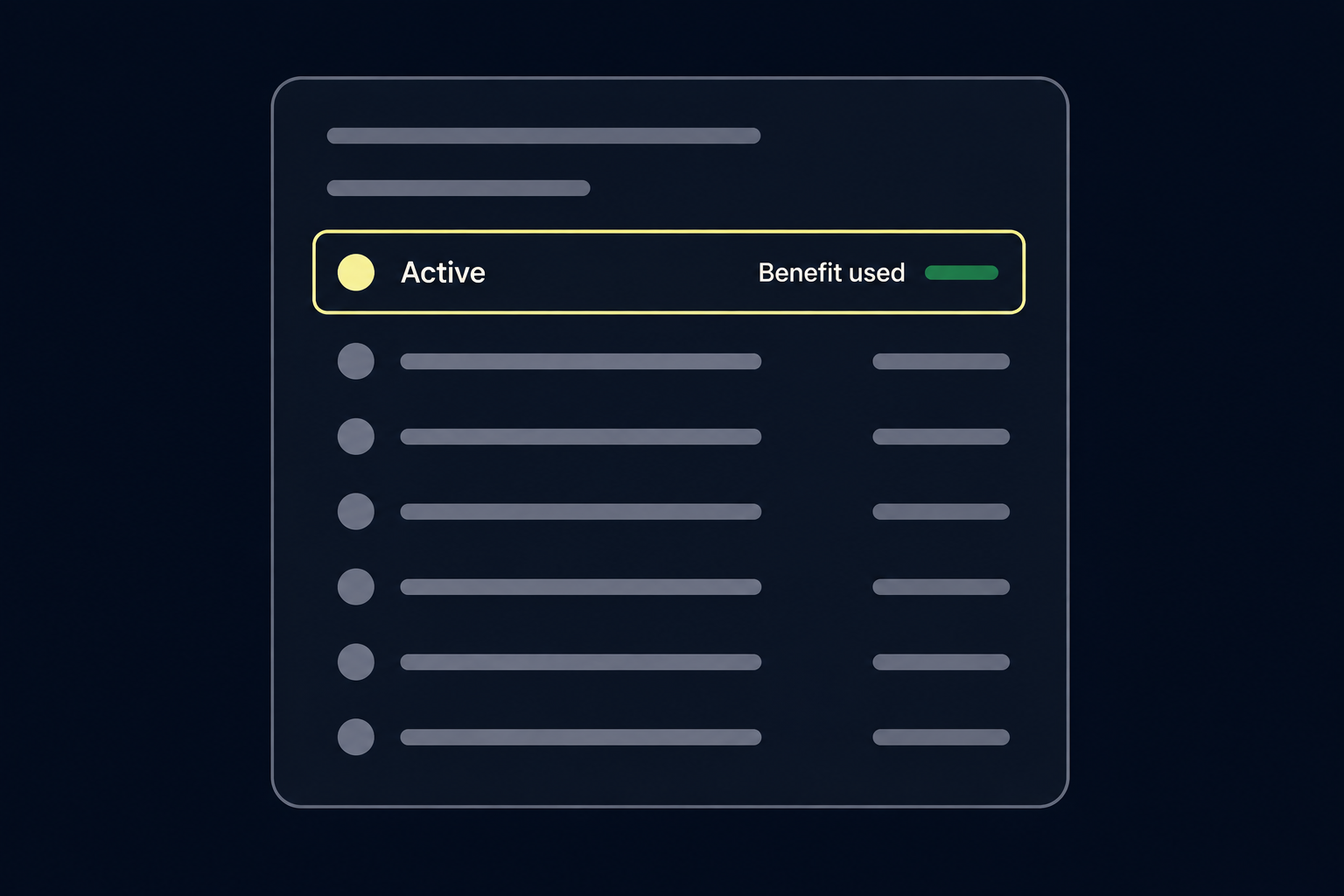
You know how that ends, because you have seen the remittance. The plan was active. The benefit was there. You were in network. And the claim still came back denied, or paid at a number nobody expected, because the visit that actually happened was not the visit the vision plan covers.
Key takeaway.
An eligibility check answers a question about the patient's coverage. It never answers a question about the visit, and the visit is what decides the payer.
The question vision insurance eligibility software cannot answer
Which plan owes.
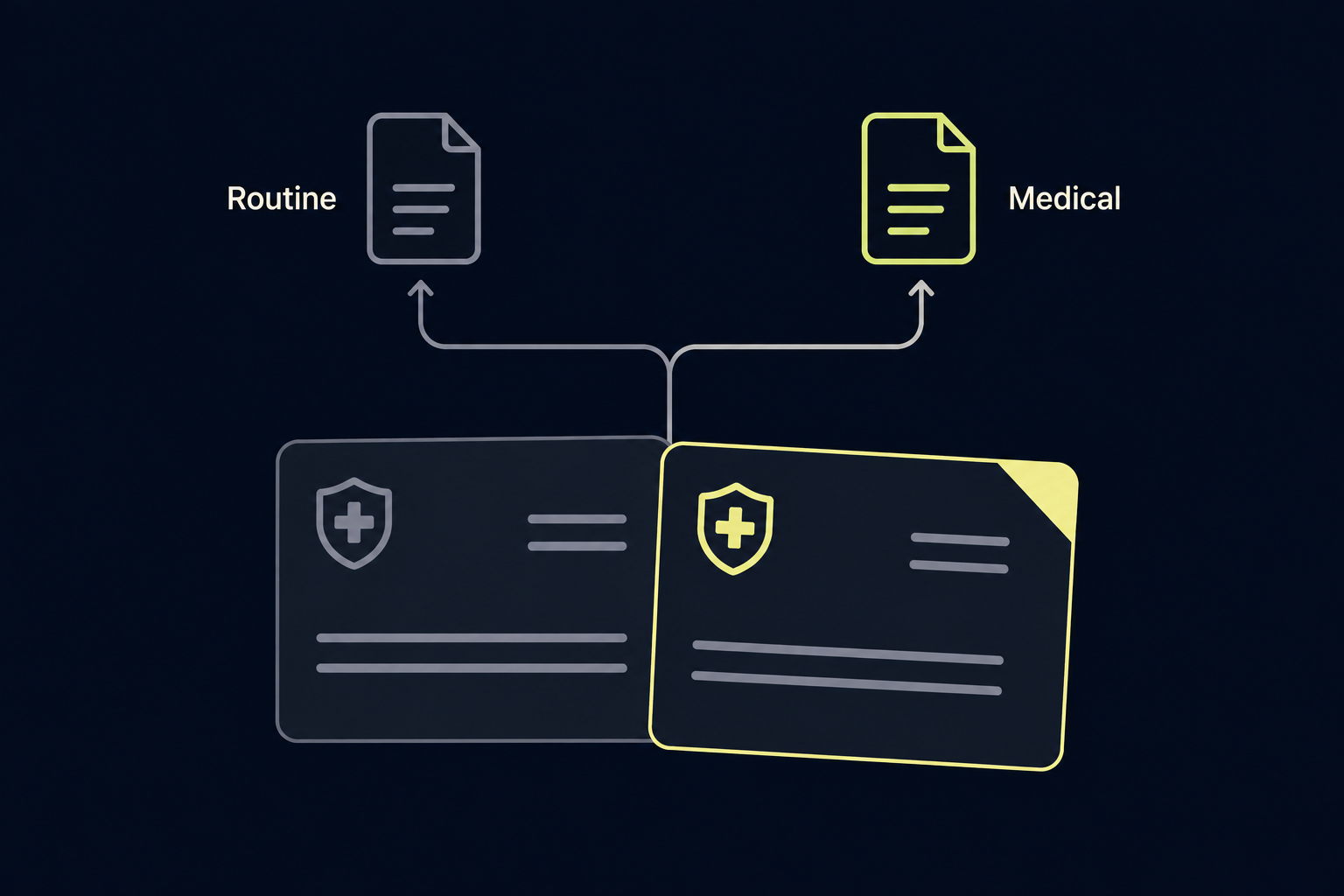
A patient books what they call an eye test. They hand over the vision card, because it has the word vision on it and this feels like a vision appointment. Your check comes back green. Then during the exam the doctor finds something worth investigating, documents it, and the encounter becomes medical. The claim now belongs to the patient's medical plan, and the check you ran at nine that morning was answering a question about a different plan entirely.
That is not an edge case you can plan around. It is an ordinary Tuesday. It is also why the line between medical and vision insurance gets drawn at your front desk rather than in billing. The exam decides the payer. The desk decides which plan gets checked, and it has to decide before the exam has happened.
Open three eligibility tools' product pages and count how many mention the medical plan at all. As of September 2026, Anagram's vision eligibility page names nine vision plans and does not mention the medical plan once.
Key takeaway.
The exam decides the payer. The desk decides which plan gets checked, and it has to decide first.
Which plan owes: a routing table for the front desk
Here is the decision the eligibility check does not make for you. Five branches, and rows three and four are where the money is.
| What happened | Which plan | What to check before the exam |
|---|---|---|
| Routine exam, no complaint, refraction and prescription only | Vision | Plan active, exam benefit unused, frame or lens allowance if dispensing |
| Booked with a symptom: flashes, floaters, pain, redness, sudden change | Medical | Plan active, copay, deductible remaining, referral or prior auth if required |
| Booked as routine, doctor finds and documents a medical condition | Medical | Both, because at booking you could not know which you would need |
| Medical condition documented and a refraction done the same day | Both, in order | Both plans, and which is primary |
| Vision plan active but the exam benefit already used this year | Neither pays the routine exam | Whether a medical reason exists, and whether the patient knows before the exam |
Row three is the one that produces the denial letter. Nothing at check in warns you it is coming, which is the whole argument for checking both plans instead of the one on the card you were handed.
When both plans pay a share, the order they are asked in matters, and coordination of benefits taken in the wrong order is its own denial pattern with its own fix.
Key takeaway.
A visit booked as routine can end as a medical encounter. That is the row that produces the denial letter, and nothing at check in warns you it is coming.
Where automated insurance eligibility verification stops
Automated insurance eligibility verification does one job extremely well. It replaces portal logins and hold music with a batch that runs overnight against tomorrow's schedule, so the answers are waiting before anyone walks in.
What it does not do is decide anything. A batch that comes back with twenty green vision plan results has told you twenty patients have active vision coverage. It has not told you which two or three of them will turn out to be medical encounters, because that is not knowable from a coverage database. It is knowable from why the patient is coming in, which sits in the appointment note and in what they say at the desk.
Practices that automate insurance eligibility checks at patient intake, rather than running them off to one side, attach the reason for the visit to the coverage answer. The two facts then arrive together, instead of one landing overnight and the other being remembered at the desk.
So the question worth asking a vendor is not how fast the check runs. It is what the tool does with the answer.
Key takeaway.
Automation makes the check fast. It does not make the decision, because the decision needs the reason for the visit and that is not in a coverage database.
Three questions that change which plan you check
They take under a minute and they change which plan you check.
Why are you here today? Not "you're here for your eye test, yes?" The open version gets you "my vision has gone blurry in one eye", which is a medical answer to what the patient thought was small talk.
Any change, pain, flashes or floaters since we last saw you? This is the one that moves a booking from the vision column to the medical column before anybody sits in the chair.
Do you have medical insurance as well as your vision plan? Most patients have both and assume the vision card is the relevant one, because the appointment has the word eye in it. If the answer is yes, both get checked.

Your front desk probably asks something close to this already. The difference is whether the answer goes anywhere, or whether it stays in the head of whoever was on the desk that morning.
Key takeaway.
Most front desks already ask something like this. What changes the outcome is whether the answer reaches the eligibility check, or stays in the head of whoever was on the desk.
Tools to verify patient insurance before appointments: what to compare
Six questions. Only two of them get answered on a typical product page.
Does it check the medical plan as well as the vision plan? Ask it directly. Several tools check vision plans only and describe that as complete verification.
Which named plans does it cover? VSP, EyeMed, Davis Vision, Superior Vision, Spectera, Humana, Avesis, Ameritas, National Vision Administrators. Ask for the list, not the number.
When does it run? Overnight against tomorrow's schedule is the useful answer. On demand at the desk is a faster version of the portal you are already using, which is worth something, but less.
What comes back beyond active or inactive? Remaining benefit, reset date, copay, deductible position, and whether you are in network on that specific plan.
Where does the answer go? A dashboard somebody has to remember to open is not the same as an answer that reaches the person checking the patient in.
What does it cost, and per what? Per provider, per check, per intake, or flat. This is the question that separates tools priced for a solo OD from tools priced for a hospital system, and it is the one most vendors make you book a call to find out.
Key takeaway.
Ask directly whether the tool checks the medical plan. Complete verification is a phrase used by products that check vision plans only.
The filing clock behind a wrong check
A wrong plan is not just a denied claim. It is a denied claim you find out about late, against a window that started the day the patient sat down.
Two numbers, from two vision plans owned by the same parent company.
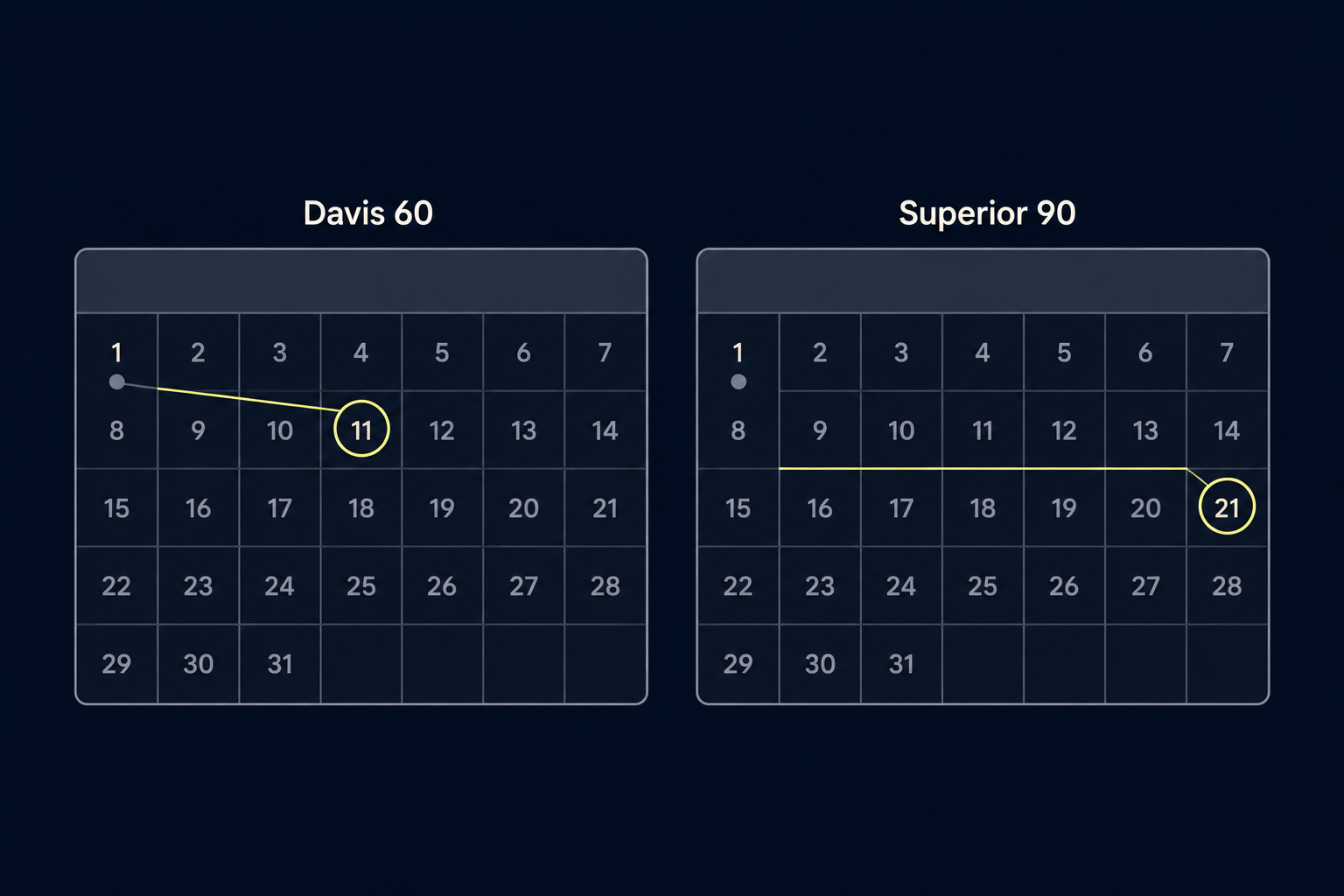
Davis Vision. "Providers are responsible for submitting all claims within sixty (60) days of the date services were provided." Provider manual, January 2015, Section II Part C, item 12.
Superior Vision. "All claims must be submitted to the Company within 90 days of the date of service, or as otherwise required by applicable law." Eye care professional manual, 2023.
Sixty days and ninety days, both Versant Health companies. If your team is working from one number for vision plans generally, one of those two is being missed by a month.
Key stat.
Davis Vision's provider manual gives sixty days from the date of service. Superior Vision's gives ninety. Same parent company, thirty days apart, and no warning anywhere in either eligibility response.
Now count what a wrong routing decision spends. The claim goes out. The remittance comes back weeks later. Somebody works out the visit was medical. The rebill happens against whatever is left of the original window, which on a sixty day clock is often not much. We covered the Davis Vision timely filing limit and its exceptions separately, with the manual quoted.
This is the cost that never shows up in a software comparison, because it does not happen at the moment of the check. It happens six weeks later, on the desk of the person who checked the patient in.
Key takeaway.
A wrong routing decision does not cost you a claim. It costs you a claim plus most of the window you had to fix it.
EHR software with automated eligibility checking, or a layer beside it
Most practice management systems now include eligibility checking, and if yours does, use it. The question is whether it does the routing.
Ask your vendor two things. Does the built in check query the medical plan, or only the vision plan on file? And does anything in the system change based on the answer, or does it just display it? Plenty of EHR eligibility features are a display of a coverage response, which is genuinely useful and is not a decision.
If you are already running RevolutionEHR, Eyefinity, Compulink or Crystal PM, a layer sitting in front of the record is a different proposition from replacing the record. Nobody should change their EHR to fix eligibility checking. That is the wrong size of project for the problem.
For the mechanics of the check itself, independent of vision plans, we have a plain explanation of how to verify patient insurance benefits.
Key takeaway.
Nobody should change their EHR to fix eligibility checking. Ask whether the built in check queries the medical plan, and whether anything acts on the answer.
Check both plans before the exam, not after the denial
GIMBL checks eligibility on the vision plan and the medical plan at intake, decides which one the visit belongs to, and builds the claim before the patient leaves. Seven day free trial, no card, no EHR change.
Frequently asked questions
What is the best software for checking vision insurance eligibility?
Depends what your actual problem is. If it is portal time, almost any batch verification tool fixes it. If it is claims landing on the wrong plan, ask specifically whether the tool checks the medical plan too, because most in this category do not.
Does vision insurance eligibility software tell you whether to bill medical or vision?
Usually not. The check returns coverage status for the plan it was asked about. Deciding which plan owes needs the reason for the visit, and that comes from the appointment note and the check in conversation, not from a coverage database.
Can one tool check both the vision plan and the medical plan?
Some can. Ask directly rather than reading "complete verification" as a yes, because that phrase gets used by tools that check vision plans only.
How far ahead should eligibility be checked?
Far enough that you can act on a bad answer before the patient arrives, which in practice means the night before. Checking at the desk leaves you nowhere to go.
What happens if the claim goes to the wrong plan?
It usually comes back as non covered, which reads like a routine denial rather than a routing error. The rebill then runs against a filing window that started on the date of service, not on the date the denial landed.
Is refraction covered when the visit goes to the medical plan?
Generally not. Optometric Management put it plainly in September 2025: most medical payors, including Medicare, treat refraction as non covered because it is not considered medically necessary, while vision plans typically include it in the exam benefit. That is why CPT 92015 is the clearest case of a code whose fate depends on which plan receives the claim, and we cover [**how to bill refraction without denials**](file:///C:/blog/cpt-92015-refraction-billing/)**.**